
Ultimate St. Augustine Travel Guide 2026 (From a Local Host)
A local host's complete St. Augustine travel guide for 2026: where to stay, eat, walk, and what to skip — from a Lincolnville porch.
St. Augustine is the oldest continuously occupied European settlement in the continental United States. That sentence does not prepare you for what actually happens when you arrive. You expect a small historic town with a few museums and a trolley line. What you find is something more like Rome compressed into forty blocks — narrow streets that change history every fifty yards, the coquina fort, the oldest school, the oldest wooden chapel, layers of Spanish, English, and American occupation all visible at once.
The problem is that most visitors follow the same script: stay downtown near the Plaza, walk St. George Street for three hours, eat at a mediocre restaurant with a pirate name, see the Castillo if they have time, and leave. They miss the actual St. Augustine.
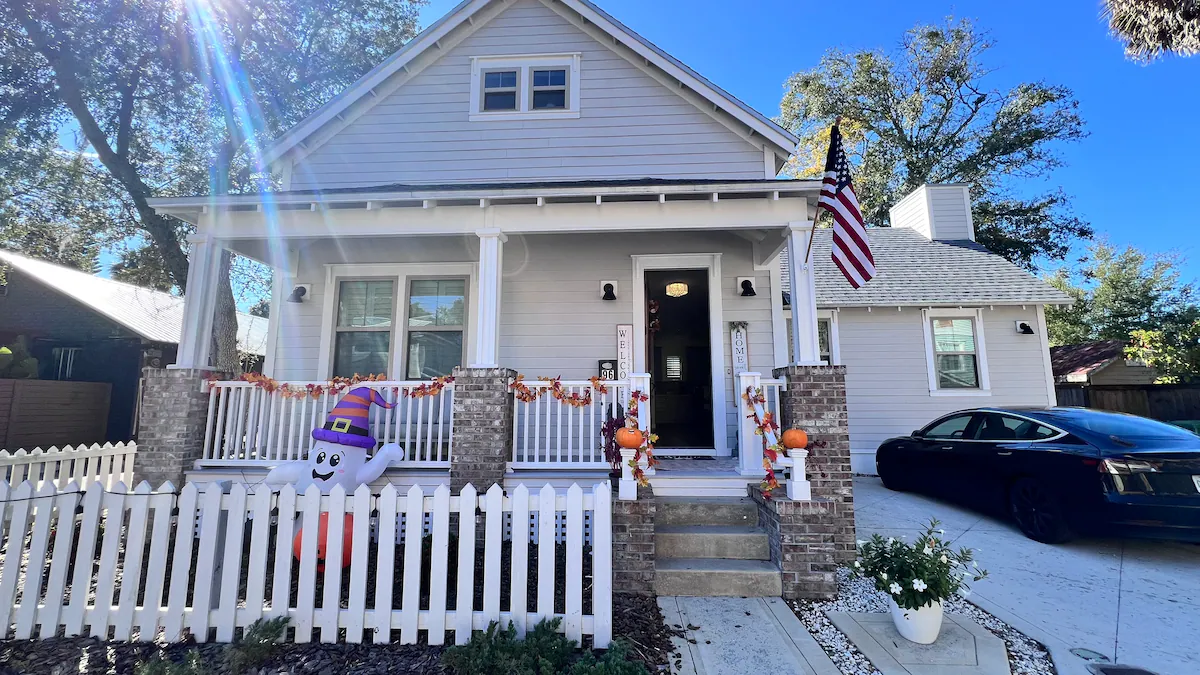
This guide is what we tell guests when they book a stay at Dinh Casa Historia, a 3BR vacation rental in Lincolnville. It is a St. Augustine travel guide built on repetition — what works, what disappoints, and the shape of a day that makes the city feel less like a destination and more like a place you could live.
A 60-second orientation
St. Augustine has a historic core of about fifteen blocks bounded by the Castillo de San Marcos to the east and the Cathedral-Basilica to the west. The heart is the Plaza de la Constitución, a Spanish square established in 1573. Radiating from the Plaza is St. George Street (the main tourist corridor, packed and mediocre), Aviles Street (narrower, better food), and Cordova Street (residential, where locals actually walk).
South of the Plaza by six blocks is Lincolnville, the historic African American neighborhood founded in 1866 by formerly enslaved residents. It is where we live, and it is where you should stay. North of the Plaza is the cathedral and the Spanish Quarter. East is the bayfront and the seawall. South and west are residential neighborhoods that tourists rarely see.
Most people orient by the Castillo (the coquina fort on the bay) and the Bridge of Lions (the iconic span crossing Matanzas Bay to Anastasia Island). Everything within a twenty-minute walk of these two landmarks is walkable. Everything else requires a car or Uber.
The historic district in 5 minutes
The Plaza de la Constitución is the oldest continuously used public square in North America, laid out in 1573. It is surrounded by the Cathedral-Basilica (Spanish colonial, 1797), shops, restaurants, and a gazebo. By day, it is shaded benches and pigeons. By night during Nights of Lights season (mid-November through January), it is wrapped in white lights and becomes the lighting heart of the historic district.
One block east is the Castillo de San Marcos, a 17th-century Spanish fort made of coquina (a natural stone made of compressed shell fragments). It is the most consequential structure in early American history and most visitors spend ninety minutes walking its courtyard and upper terreplein. We have written a full Castillo visitor guide that covers timing, parking, what to look for, and the cannon firing demonstration.
St. George Street runs north-south through the Plaza and is lined with gift shops, restaurants, and more gift shops. It is crowded, mediocre, and worth a single walk for the novelty — but eat elsewhere.
Aviles Street, one block west of St. George, is narrower and better. It has the Cathedral, the Spanish Quarter (a reconstruction of colonial houses and a blacksmith), small galleries, and Café del Hidalgo (the best Cuban coffee in the historic district).
Cordova Street runs east-west and is quieter. It has The Floridian (the best restaurant in St. Augustine), Southern Charm Bake Shoppe (the best cinnamon roll), and the seawall access that leads to the Bridge of Lions.
That is the historic center. Walk any of these streets and you will find something interesting within one block in any direction.
Lincolnville is the neighborhood you want
Lincolnville is a six-block National Register historic district immediately south of the Plaza. It was founded in 1866 by formerly enslaved residents and is a living neighborhood, not a museum. It has the Lincolnville Museum & Cultural Center (an essential two-hour visit covering the 1964 Civil Rights demonstrations), local restaurants, a brewery, a lake with herons and alligators, and residents who have actually lived here for decades.
Most St. Augustine tourism advice skips Lincolnville entirely. That is a mistake. Stay here (at a vacation rental like ours), and the Castillo becomes a seven-minute walk, The Floridian becomes a three-block errand, and you get the rhythm of an actual neighborhood instead of the rhythm of a tourist district.
Cerro Street, King Street, and Cordova Street are the main Lincolnville thoroughfares. West King Street has Bog Brewing and Catch 27. Cordova Street has The Floridian and leads to the seawall. Maria Sanchez Lake, on the southern edge, is a one-mile loop with herons, pelicans, and oak shade.
For a fuller Lincolnville guide, see our 17 things to do in Lincolnville.
Where to stay: rentals vs. hotels
St. Augustine has two lodging options: historic-district hotels and vacation rentals. Hotels put you in the thick of it (noise, crowds, Uber pickup chaos) and start at $120/night for mediocre. Vacation rentals in Lincolnville cost $180-$250/night for a full house with a kitchen, washer, porch, and actual peace.
The advantage of a rental in Lincolnville:
- The Castillo is an eight-minute walk, not a twenty-minute drive plus parking
- You eat at home sometimes (save money, avoid the worst tourist restaurants)
- You have a porch. This matters more than it sounds. See item #17 in our Lincolnville guide
- You are in the neighborhood, not in the noise
Hotels work if you are here for a single night and need to be downtown. Lincolnville rentals work if you are here for a weekend or longer and want St. Augustine to feel like a place instead of a destination.
If you book with us at Dinh Casa Historia, you get a three-bedroom house with a full kitchen, two bathrooms, a porch with adirondacks, and a map we hand-annotate on your arrival with the routes locals actually walk.
Eat: 12 places worth your meals
St. Augustine has more restaurants per capita than any city we have visited, and about 60% of them are tourist traps. Here are the twelve that are actually worth your reservations. We have written a longer best restaurants guide that covers these in detail, but the short list:
The Floridian — Southern farm-to-table three blocks from our porch. Stone-ground grits with oyster mushrooms, sweet-potato hush puppies, fried green tomato BLT. Dog-friendly patio. Reservations required for dinner; weekend brunch wait list fills by 10am.
Catch 27 — Florida-only seafood, mostly local catch from St. Augustine and Mayport. Shrimp and grits are the dish; the daily fish special is rarely wrong. Wait list fills by 6pm in season.
Preserved — Farm-to-table on San Marco Avenue, one block from the Plaza. They source from local farmers and the menu changes weekly. The roasted chicken is the standout. Reservations recommended.
Columbia — Spanish restaurant on St. George Street with 100+ years of history. The black bean soup and the 1905 salad are the classics. Loud, crowded, worth once.
Casa Maya — Mexican on San Marco Avenue, more upscale than it appears. The mole and the chile relleno are the dishes. No reservations; arrive before 6pm or wait.
Collage — Eclectic on St. George Street (but in the less-crowded northern section). French, Spanish, American in one menu. The duck and the bouillabaisse are exceptional.
Ice Plant Bar — Craft cocktails in an old ice factory on Ribiera Street. The bartender knows the classics and the rum selection is one of the best in Florida. Food from the adjacent kitchen is good but small.
La Pentola — Italian on Cathedral Place, a quieter St. George off-branch. Handmade pasta, simple sauces. The tagliatelle bolognese is the order. Smaller, less crowded than downtown options.
Kookaburra Coffee — Not a restaurant but essential. The best coffee in the historic district, three blocks from Lincolnville. Flat white and the lavender lemon scone are the routine.
Gas Full Service — Casual American on King Street, neighborhood spot that locals actually eat at. The blackened fish sandwich and the sweet potato fries. No reservations, no crowds, just good food.
Hyppo Gourmet Pops — Artisan popsicle shop on St. George Street. The flavors rotate (sea salt & rosemary, whiskey & ginger) and they use local fruit. More refreshment than meal, but essential in summer.
Bog Brewing — Brewery on West King Street in Lincolnville, the only neighborhood brewery. Backwater IPA is the year-round safe bet. Patio is dog-friendly. Pizza from Catch 27 next door delivers across the parking lot.
See the best restaurants guide for full details on each, including what to order, when to go, and who they are for.
Walking: the only way to do downtown right
St. Augustine’s historic district is 1.3 square miles. Everything interesting is walkable. The mistake most visitors make is driving between stops.
The downtown walking pattern:
- Start at the Castillo (9am, beat the crowds)
- Walk west through the courtyard and up to the terreplein
- Exit and walk the seawall north toward the Bridge of Lions (15 minutes)
- Walk across the Bridge of Lions and back (you get the fort silhouette view)
- Return to the Plaza de la Constitución (35 minutes from the Castillo)
- Walk north to the Cathedral and the Spanish Quarter (15 minutes)
- Walk Aviles Street south (narrower, better than St. George)
- Circle back to the Plaza
- Walk south on Cordova Street toward Lincolnville (15 minutes)
- Walk the Maria Sanchez Lake loop (45 minutes)
Total: four to five hours, mostly shaded, mostly quiet if you time it before 11am.
Do not drive between stops. Do not take a trolley (they are slow and you see the same thing twice). Walk.
Beaches & day trips
Anastasia Island is two miles east, accessible by the Bridge of Lions. The northern end has Anastasia State Park, a 1,600-acre park with dog-friendly beach, nature trails, and hard-packed sand good for senior dogs.
The southern end has St. Augustine Inlet and a historic lighthouse (built 1874). The lighthouse is 165 feet tall; if you climb it, the view of the barrier island, the inlet, and the mainland is the best perspective on the geographic setup of the area. Plan one to two hours.
The beach itself is pleasant but not remarkable. The water is cold (even in summer) and the waves are mild. Most locals come for the state park trails (better than the beach) or the dog beach (if they have a dog).
Other day trips:
- Vilano Beach (north of the historic district) — even quieter than Anastasia, locals-only feel, better seafood restaurants (Davis’s, Hurricane Seafood). 15-minute drive.
- St. Augustine Distillery — five-minute walk from Lincolnville along Ribiera Street. Free tours every 30 minutes, finish with a tasting flight. New world rye is the standout.
- San Sebastian Winery — next door to the distillery, same five-minute walk. Free tasting and tour; the muscadine wines are an acquired taste worth acquiring.
When to visit: month-by-month
November through January (Nights of Lights season): The historic district is wrapped in white lights from mid-November through early January. The Plaza becomes a winter festival destination. Beautiful, crowded, and expensive. Hotels fill months in advance. If you are considering November or December, book now. (We have a full Nights of Lights 2026 guide.)
October and April: The sweet spot. Weather is warm, humidity is lower, crowds are moderate. Hotels are $100-130/night, restaurants have reservations, nothing is sold out. Go in October or April if you want to visit without the September heat or November crowds.
May through September: Hot and humid. Afternoon thunderstorms are daily. Restaurants are slow, museums have short lines, hotels drop to $80-100/night. Visit if you are heat-tolerant and price-sensitive. The Castillo’s upper terreplein is brutal in July.
February and March: Spring break season. Florida schools break in mid-March and families flood the beaches. St. Augustine is less affected than the coast, but hotels jump to $150+. Skip unless you are traveling with school-age kids.
July 4th and Labor Day weekends: Avoid. Beaches are packed, restaurants have two-hour waits, parking is chaos. Not worth it.
Practical: parking, taxes, what to skip
Parking: If you stay in Lincolnville, you do not need a car. The Castillo is an eight-minute walk, The Floridian is three blocks, the Plaza is six blocks. For a day trip to Anastasia State Park or Vilano Beach, use Uber ($8-12 each way) or rent a car for the day ($30-50). Parking near downtown is metered and fills by 10am.
Sales tax: Florida has 6.5% sales tax plus local bed tax (6% on hotel rooms, varies for rentals). It is not included in menu prices, so budget accordingly.
What to skip:
- St. George Street restaurants — tourist-grade mediocre. Walk six blocks south to Lincolnville instead.
- The Potter’s Wax Museum — worst decision we have made as guides. It is exactly what it sounds like: wax figures in a cramped room. Skip entirely.
- The alligator farm — marketed heavily, not worth the $35 entry or the time. Most gators are asleep. See herons and alligators for free at Maria Sanchez Lake.
- Trolley tours — slow, crowded, you see the same thing twice. Walk instead.
- Ripley’s Believe It or Not — tourist trap masquerading as a museum. Avoid.
- Driving anywhere in the historic district — park at Dinh Casa Historia in Lincolnville and walk. Driving creates the only traffic and parking chaos the city has.
The rhythm that actually works
Most St. Augustine visitors over-itinerary. They do the Castillo and then St. George Street and then the lighthouse and then the beach and then realize at 9pm they have not eaten dinner and they are exhausted.
The rhythm that actually works is slower:
- Walk (one area at a time)
- Eat (seated, no rush)
- Sit (on a porch or a seawall bench)
- Walk again (a different direction)
- Eat again (same restaurant or different)
- Sit again
This sounds lazy. It is the shape of a day that makes the city memorable instead of exhausting.
If you stay in Lincolnville, this rhythm becomes automatic. You walk to the Castillo in the morning, sit on the porch after, walk to The Floridian for lunch, sit on the seawall after, walk the Maria Sanchez Lake loop at 5pm, drink beer at Bog Brewing, walk to Catch 27 for dinner. That is a full day, measured, not rushed.
If you are ready to book a St. Augustine stay, the Dinh Casa Historia property guide covers what the home itself offers, what’s included, and how to reserve direct. Three bedrooms, two bathrooms, a full kitchen, a porch with adirondacks, and a hand-annotated map of the routes we actually walk.
Dinh Casa Historia — the Lincolnville farmhouse behind this guide
Three bedrooms, two baths, fenced yard, eight minutes on foot to Castillo de San Marcos. Booking direct saves 15-20% versus Airbnb on the same calendar.
Check availabilityMore from the local guide
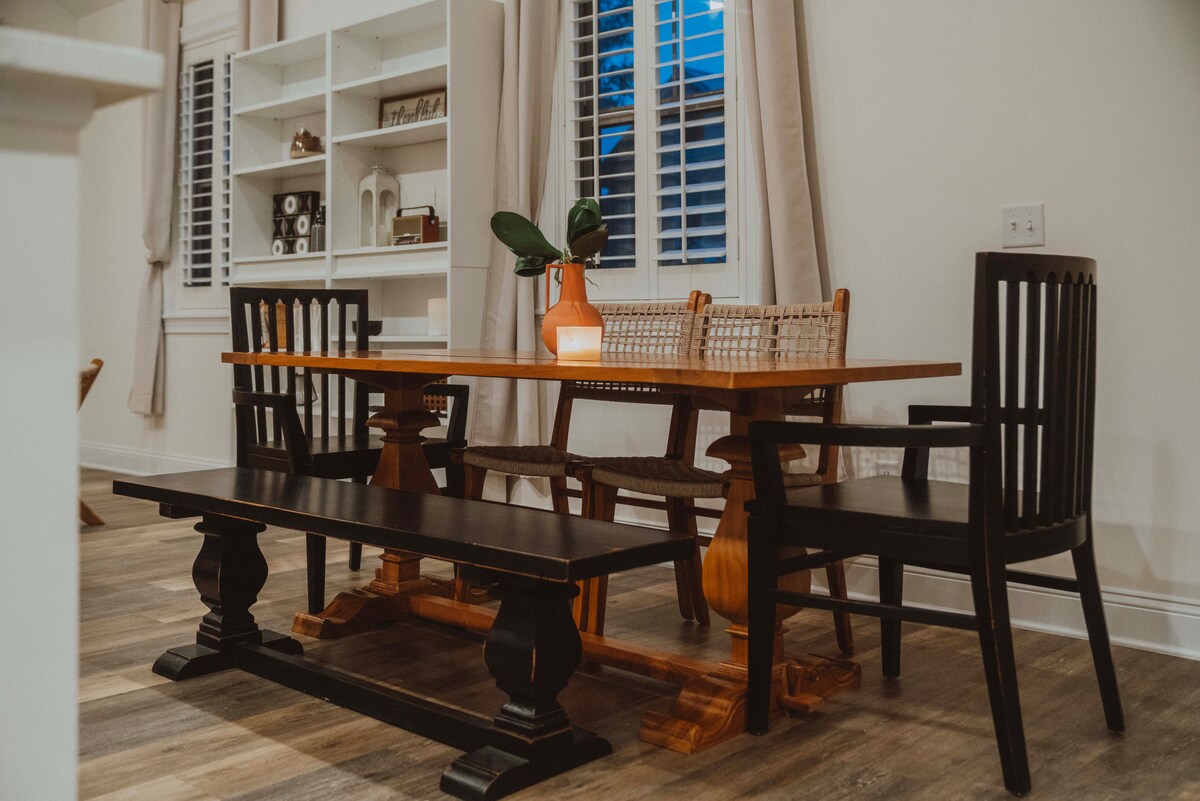
12 Best Restaurants Near St. George Street (2026 Local Picks)
12 restaurants near St. George Street worth your dinner reservation, ranked by a local host. From Spanish tapas to Florida seafood.
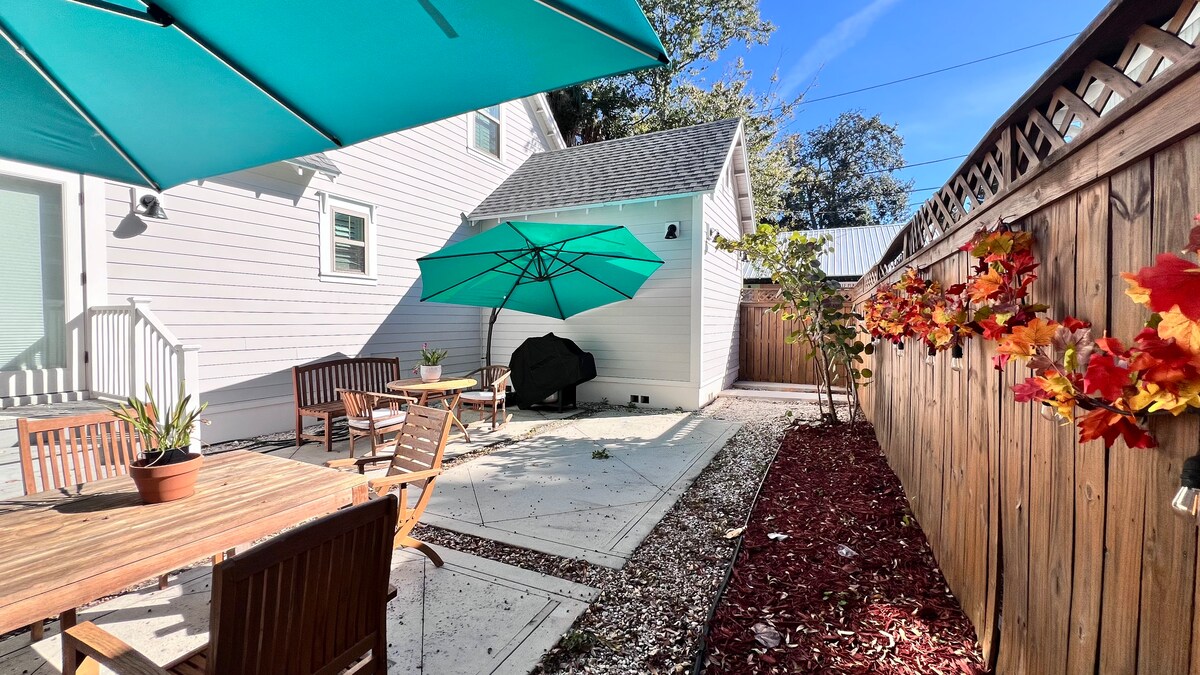
Perfect St. Augustine 3 Day Itinerary (2026 Local's Plan)
A 3-day St. Augustine itinerary written by a local host: Castillo, St. George Street, beaches, distillery, where to eat & where to skip.
Nights of Lights 2026: Where to Stay & What to See
Nights of Lights 2026 in St. Augustine: schedule, where to stay, walking route from Lincolnville, best nights to visit. Holiday weekends sell out.
Reserve your St. Augustine stay
Same calendar Airbnb shows, lower fees on direct bookings. Florida tourism tax (11.5%) included in the total.
The direct booking calendar will appear here.
Once Hospitable is connected, guests will see real-time availability and pricing right in this spot — same calendar as Airbnb, lower fees. While we finish setting it up, please book through Airbnb.