
Spanish Wine Festival St. Augustine 2026: Survival Guide
Spanish Wine Festival St. Augustine 2026: dates, tickets, where to stay walking distance, food pairings. Book direct and skip Uber rides.
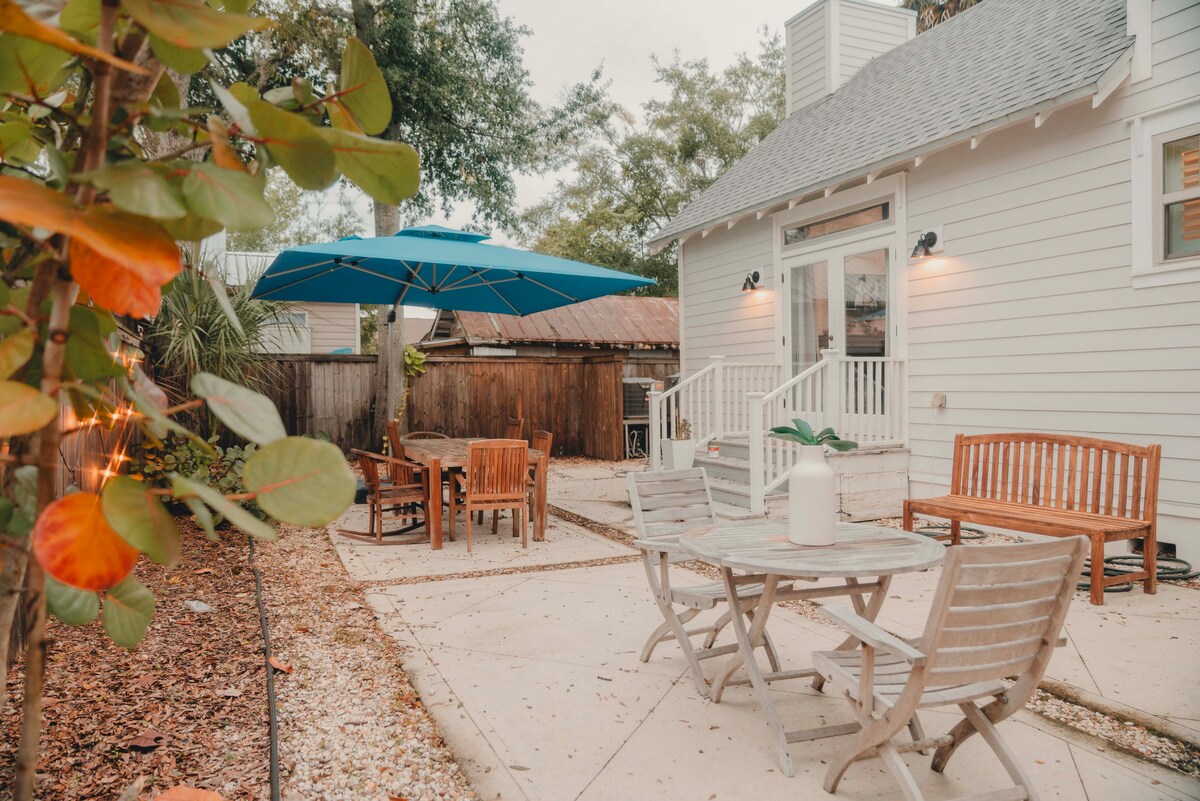
St. Augustine’s Spanish Wine Festival is the closest thing the city has to a grown-up event. Three days of Spanish wine producers pouring directly into your glass, Spanish food from local restaurants, no entry fee unless you buy tickets, no forced agenda, no theme-park atmosphere. Just wine and tapas and the ability to walk from your rental to the festival without negotiating parking.
The festival typically happens in late March or early April — Spain and Florida both cooperate on the dates and the exact calendar flips year to year. But the format is consistent: a weekend event at the Visitors Information Center and the surrounding historic district, with wine pours from producers you have never heard of and wine bars from restaurants you probably want to eat at anyway.
We host guests coming specifically for the festival, and we host guests who accidentally arrive during it and completely re-plan their weekend. Below is everything we tell them — the dates, the strategy, where to stay so you do not need a car, what to actually taste, and how to eat.
What is the Spanish Wine Festival (and why it matters)
Spanish wine is not French wine. It is not California wine. Spanish wine is: Riojas and Ribera del Dueros from northwestern Spain, Albariños from Galicia, Sherries from Jerez, natural wines from small producers you have never heard of. The price point is typically $15-30 for very good bottles, which is why Americans do not take Spanish wine seriously — it is inexpensive and therefore assumed to be simple.
It is not simple. Spanish wine is complex, age-worthy, and genuinely interesting. A Rioja Reserva is not a $15 bottle trying to be a $40 bottle. It is a $15 bottle that tastes like $30 bottle from a different place.
St. Augustine’s festival attracts Spanish wine importers, distributors, and individual producers. They set up in tents in the Visitors Information Center area and you walk from tent to tent, tasting pours, asking questions, and generally feeling like you are in a small wine region in Spain instead of Florida.
The festival started roughly in 2012 and has become a serious event — wine people from across Florida and the Southeast fly or drive to St. Augustine specifically for this weekend. That means it fills rooms fast, restaurants get crowded, and if you are not strategic, you end up in a hotel on Anastasia Island and spending $40 on Ubers to get to wine pours.
The smarter strategy: stay walking distance, plan ahead, eat before you drink, and treat it like a neighborhood event instead of a destination festival.
2026 dates and format
The Spanish Wine Festival 2026 dates are typically announced by January and published on the St. Augustine Visitors and Convention Bureau website. Based on recent years:
- Likely dates: Last weekend of March or first two weekends of April (confirmed calendar usually published by January)
- Location: Visitors Information Center area, Castillo Drive, and adjoining blocks in the historic district
- Format: Wine producers in tents (typically 50-70 producers), food from local restaurants, live music, wine classes (some ticketed, some free)
- Entry: Free to walk the festival. Tasting tickets typically $1-2 per pour, or you can buy a flight pass ($40-60 for 8-10 pours)
- Hours: Usually 12pm-6pm Saturday and Sunday, sometimes noon-4pm Friday
Check the St. Augustine Visitors Bureau website (visitstaugustine.com) around January for the confirmed 2026 dates. They announce early and the dates rarely shift.
Tickets and strategy: the right approach
There are three ways to experience the festival:
Option 1: Walk the tents, pay per pour. No advance planning. You walk from tent to tent, taste what looks good, pay $1-2 per pour. You might spend $30-50 total for eight to twelve tastes. This is casual and works if you are not trying to taste specifically.
Option 2: Buy a flight pass. Pre-purchase a pass (usually $40-60) that gets you 8-10 pours from producers of your choice. This forces you to decide in advance but gives you discounts and a structure. Some passes are specific to a type of wine (Riojas only, Sherries only).
Option 3: Buy a wine class. The festival usually has one or two educational tastings run by wine experts ($25-40, usually 90 minutes, maybe 6-8 wines plus food). This is the serious option if you want to learn about Spanish regions, production methods, etc.
Our recommendation: Do not over-plan. Walk the festival on Saturday afternoon without a pass, taste whatever looks good, buy a few bottles from producers you like. Use Sunday for a more structured tasting if you want. The whole point is that it is low-pressure and walkable.
Practical tip: Eat a large lunch before you start tasting. Tasting on an empty stomach leads to poor decisions, drunk feeling, and no actual enjoyment of wine. Have lunch at 11am. Start tasting at 1pm.
Where to stay: walking distance is everything
This is the most important decision of the festival weekend.
Do not stay at a hotel on Anastasia Island or off San Marco Avenue north of the festival area. If your hotel is more than a ten-minute walk from the Visitors Information Center, you will spend the festival in Ubers and miss the actual point.
Stay at a vacation rental in Lincolnville or the historic district directly adjacent to the festival area. If you stay in Lincolnville, the walk to the festival is twelve minutes. If you stay closer, it is eight minutes. Both are walkable, neither requires a car, and both let you go home, rest, change shirts, and come back without Uber fare.
Dinh Casa Historia is a three-bedroom rental in Lincolnville, twelve minutes from the festival. Rent it for the festival weekend, three people or one couple, and you have a full house, a porch, and walking access to all the festival activity plus the best restaurants in the neighborhood.
The cost is $180-280 per night depending on exact dates. For three people, that is $60-95 per person per night, plus you get breakfast-making capability, a place to rest between Saturday and Sunday, and a place to bring bottles you buy at the festival without worrying about hotel room rules.
What to taste: the actual strategy
Spanish wine regions are specific. If you are new to Spanish wine, here is a 90-second primer:
- Rioja: The most famous region, wines aged in oak, smooth, drink-now or age ten years, $15-50 a bottle, the one you want to try first
- Ribera del Duero: Nearby to Rioja, bigger and bolder, made from Tempranillo, $20-60 a bottle, serious wines
- Albariño: From Galicia, white wine, crisp, seafood pairing, $12-25 a bottle, lighter and more refreshing than reds
- Sherry: From Jerez in the south, fortified wine, complex, dry to sweet versions, $10-30 a bottle, food-friendly
- Natural wines: Small producers making wine with minimal intervention, sometimes a little funky, sometimes brilliant, $15-40 a bottle
Your strategy at the festival: taste one wine from each major region. Buy a bottle or two from a producer that speaks to you. Do not try to taste 30 wines in an afternoon.
The producers usually give you tasting notes and information about the vineyard, the producer, the story. Listen to the story. The wine is good because of the person and the place, not the label.
If someone pours you a Rioja and you like it: buy it. It will cost $15-30 and will be better than most wines you buy at a store. Producers at the festival give you directly-from-them pricing, which is actually cheaper than wine shops.
Food pairings: what to eat
The Spanish Wine Festival is as much about food as wine. Local restaurants set up tents or booths with tapas and dishes that pair with the wines:
Restaurants typically represented:
- The Floridian: Southern farm-to-table, usually does something vegetable-forward or seafood that goes with whites and lighter reds
- Catch 27: Seafood restaurant, does shrimp and grits or ceviche that pairs with Albariño or light reds
- Collage Restaurant: French-Spanish fusion, does charcuterie and cheese boards that pair with full-bodied reds
- Spanish/Cuban options: Café del Hidalgo or other Aviles Street restaurants usually have Spanish tapas that are specifically designed for wine pairing
The real point: Do not skip eating. Wine on an empty stomach is miserable. Eat something between every two to three wine pours. That keeps you calibrated, keeps you enjoying the actual experience, and prevents the drunk-at-3pm situation that ruins everyone’s weekend.
If you stay at a rental, you can walk home and make a real lunch, then come back. This is why staying in Lincolnville is better than a hotel. You can do breakfast, festival morning, lunch at home, festival afternoon, dinner at a restaurant, more wine evening. You are pulsing instead of marathon-drinking.
Survival tips: do not drive, do not skip sleep, do not overplan
Do not drive to the festival. This is absolute. If you drive, you have to park, you have to think about parking, you cannot have more than one or two wines, the whole vibe changes. Walk. You will have a better time.
Do not skip sleep. The festival is Saturday and Sunday. Many people try to extend it Friday night (getting drunk on bad wine at a bar) or continue it Sunday evening. Stop at reasonable hours. Go to bed. The festival is still good the next morning.
Do not overplan. You do not need a schedule. “Saturday 1pm to 3pm wine, 3pm to 5pm food, 5pm to 7pm wine, 7pm dinner.” That is exhausting. Just walk to the festival, taste some wine, eat something, maybe go home and rest, maybe go back, maybe eat dinner. Let the day happen.
Bring water and a hat. The festival is outdoors. It is Florida. Bring a water bottle (the festival sometimes has water stations). Bring a hat if you are sensitive to sun. This is not dramatic — it is practical.
Do not drive after the festival. If you drank, do not drive. Walk home. Call Uber if you do not want to walk. But do not convince yourself that you are fine to drive after wine tasting all afternoon.
Beyond the festival weekend
The Spanish Wine Festival is the draw, but St. Augustine does not stop being interesting on Monday.
If you are coming for the festival, stay an extra two days. Do a walking tour of the Castillo (our Castillo guide covers the best time to visit). Do breakfast at The Floridian or Southern Charm Bake Shoppe. Do the Maria Sanchez Lake loop walk. Sit on the porch of your rental and do nothing.
The wines you bought at the festival are meant to be drunk at home, or you could open one that evening and sit on the porch of the rental and drink it while watching the neighborhood. That is the actual best-case scenario: a bottle of Spanish Rioja, a porch in Lincolnville, oak trees, quiet.
Real questions we get asked
“What if I do not like wine?” Do not force it. The festival has food booths that are good independent of wine. Come for the food and the neighborhood atmosphere. Or skip the festival entirely and plan a regular Lincolnville weekend. Wine is not mandatory for a good trip.
“Is it expensive to eat at the festival?” Food booths charge per item, usually $5-15 per tapa or plate. Wine pours are $1-2 per taste or $40-60 for a flight pass. A reasonable Saturday at the festival costs $30-50 for wine and $40-60 for food. That is reasonable for a good experience.
“Can I bring my dog?” The festival grounds are outside but crowded — not ideal for dogs. Leave your dog at your rental during the festival. Spend evening and morning with your dog. See our dog travel guide for dog-specific activities.
“How much wine should I buy?” Buy one or two bottles from producers you actually liked. Avoid “I like the label” purchases. The producer is probably there answering questions — ask them. They will tell you whether it ages or drinks now, what it pairs with, etc. Buy based on that conversation, not impulse.
“Should I take a wine class?” If you are new to wine, yes. If you are experienced, maybe not. A class adds structure but costs extra and limits flexibility. Try the walk-around approach first.
The real point
The Spanish Wine Festival works because it is genuinely low-key. It is not Napa Wine Country with $500 tickets and assigned seating. It is “Spain sent some winemakers to Florida and you can walk around and taste wine.” That simplicity is the whole appeal.
Combine that with staying walking distance, eating well, and not overplanning, and it becomes one of the better wine weekends you can do for the money. You are in a 450-year-old city, tasting wines from regions you have never been to, eating food from restaurants you are going to eat at again, staying in a neighborhood where you can walk everywhere.
That is the festival. That is worth planning for.
If the Spanish Wine Festival is on your calendar, Dinh Casa Historia is the right base. Walking distance to the festival, full kitchen to make breakfast, porch to sit on, quiet neighborhood to return to after tasting. Book direct and save 15-20% versus online platforms. For more on what to do in Lincolnville beyond the festival, see our comprehensive neighborhood guide.
Dinh Casa Historia — the Lincolnville farmhouse behind this guide
Three bedrooms, two baths, fenced yard, eight minutes on foot to Castillo de San Marcos. Booking direct saves 15-20% versus Airbnb on the same calendar.
Check availabilityMore from the local guide
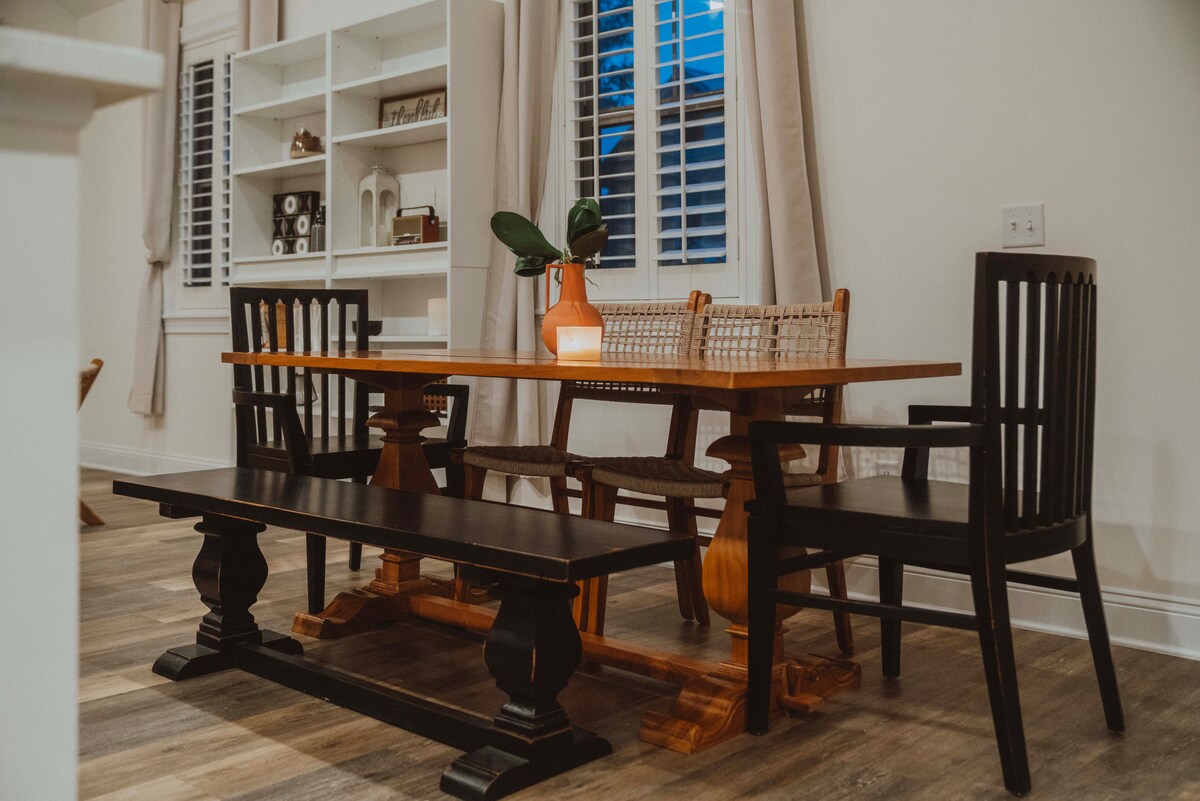
12 Best Restaurants Near St. George Street (2026 Local Picks)
12 restaurants near St. George Street worth your dinner reservation, ranked by a local host. From Spanish tapas to Florida seafood.
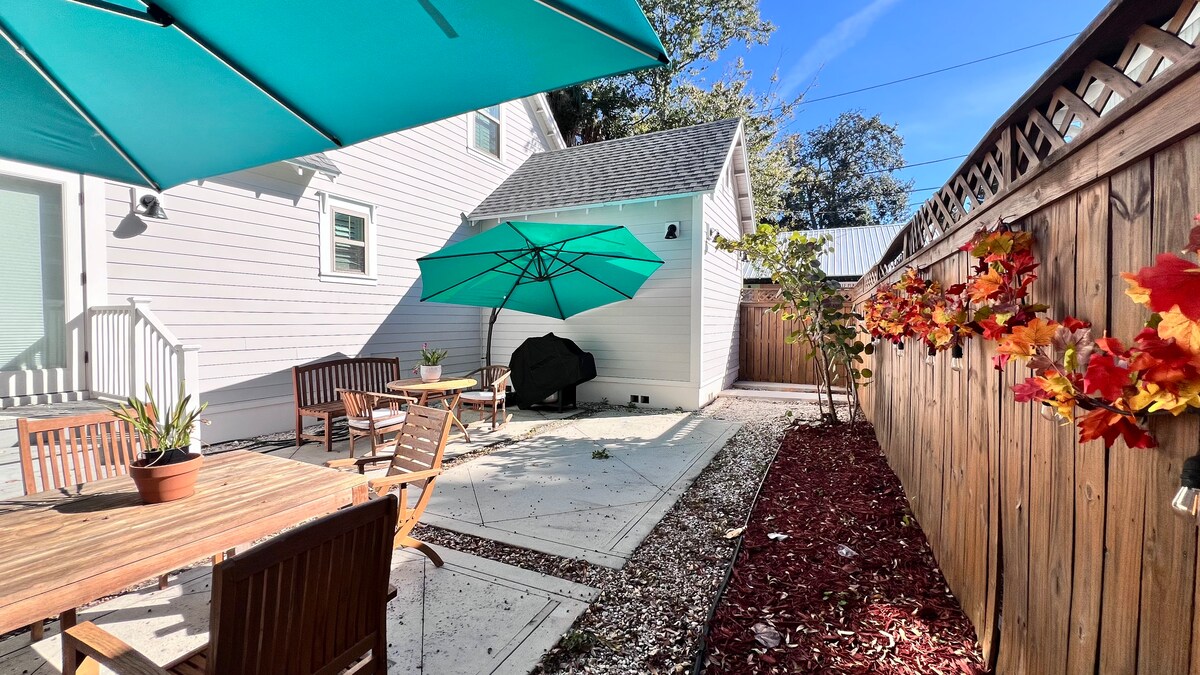
Nights of Lights 2026: Where to Stay & What to See
Nights of Lights 2026 in St. Augustine: schedule, where to stay, walking route from Lincolnville, best nights to visit. Holiday weekends sell out.
Reserve your St. Augustine stay
Same calendar Airbnb shows, lower fees on direct bookings. Florida tourism tax (11.5%) included in the total.
The direct booking calendar will appear here.
Once Hospitable is connected, guests will see real-time availability and pricing right in this spot — same calendar as Airbnb, lower fees. While we finish setting it up, please book through Airbnb.